






Polio . . . Forgotten but not gone !

Polio (poliomyelitis or infantile paralysis) is now a disease that has virtually been forgotten by our community and health professionals. Although vaccination programs beginning in the late 1950s have prevented new infections in Australia, polio survivors form the largest single physical disability group in the country. We’re still here!

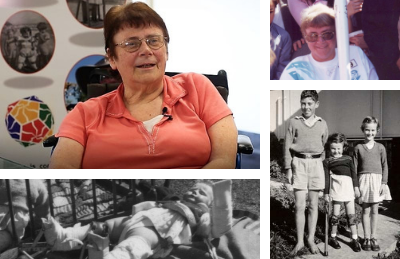
Polio survivors Ravy Leang-Slattery and her husband Wayne Slattery inform
Prime Minister Julia Gillard about the late effects of polio and the need for the
Australian Government to support Polio Australia’s work – 23 November 2012

Between the 1930’s and 1960’s there were 40,000 cases of paralytic poliomyelitis recorded in Australia but real numbers of polio infection could be up to 100 times greater. This is because only 1 in 100 cases of poliomyelitis causes complete paralysis thereby requiring hospitalisation and mandatory reporting. However, a large percentage of the ‘non-paralytic’ and non-reported polio infections would still have caused considerable damage to the motor neurons. Professionals with first-hand experience of the disease have long since retired and there is an urgent and growing need for Australians to become re-acquainted with polio and its late effects.

Living with the Late Effects of Polio

Over the last twenty years much attention has been drawn to the development of new, previously unrecognised, symptoms which occur in people who were thought to have reached a stable level of recovery after the acute disease. Many polio survivors who have emerging symptoms still report difficulty in obtaining correct diagnosis and treatment. The large number of survivors who are now experiencing new symptoms has transformed the problem from an individual predicament to a social concern.

As time passes, an increasing number of previously ‘stable’ persons with a history of polio infection report unexpected new symptoms. The time lag from the initial infection to the second phase varies but is commonly approximately 30 years. The onset is usually slow and steady. It may occasionally develop suddenly and progress at an irregular pace. Symptoms sometimes emerge after a period of physical or emotional strain, or after a period of immobility i.e. disease or surgery.

Symptoms of the Late Effects of Polio can include . . .

  • unaccustomed fatigue unrelated to activity
  • decreased strength and endurance
  • pain in muscles and/or joints
  • an inability to stay alert
  • new muscle weakness and atrophy
  • muscle and joint pain
  • muscle spasms/twitching
  • respiratory and sleep problems
  • swallowing or speaking difficulties
  • cold and/or heat intolerance

Fast Facts

During the 20th century poliomyelitis (polio) was a commonly contracted disease in Australia with frequent epidemics. Huge numbers caught polio. These may be categorised as follows:

  • 89% were unaware of infection or were affected minimally short-term and were not expected to be affected long-term
  • 10% appeared to recover short-term with no obvious resultant disability
  • 1% did not recover short-term and were left with varying degrees of paralysis (minimal up to iron lung)
  • 0.1% died due to respiratory involvement

Paralytic Polio

  • 1% of polio survivors did not recover short-term and were left with varying degrees of paralysis – they are referred to as having contracted “paralytic polio”
  • Between the 1930’s and 1960’s, 40,000 Australians contracted paralytic polio
  • The same polio virus (3 strains) causes all categories of polio – “paralytic” polio is not caused by a “special” type of polio virus
  • Some of the discussion about polio is confusing because the term “polio” is used when referring to only “paralytic polio” – the 40,000 paralytic polio cases represent only 1% of the actual polio numbers

Recovery from Paralytic Polio

  • While some polio patients appeared to recover from initial paralysis (diagnosis was probably “non-paralytic” polio), in reality, they still had neurological impairment
  • This is because paralysis is only visible when 50%+ motor neurons are killed or damaged
  • In addition, muscle weakness may not be perceived if the weakness is balanced (eg weakness affects both legs)

What the experts say . . .

“It should be absolutely understood that patients who were told that they had ‘non-paralytic’ polio did, in reality, have polio, which affected their anterior horn cells. Now, 30 to 40 years later, these patients are potentially subject to all of the vagaries and insults to the body that affect other persons with postpolio syndrome.”
A Clarification of “Nonparalytic” Polio
Johnson, Ernest W MD
American Journal of Physical Medicine, Vol. 79(1), Jan/Feb 2000

“Asserting that a history of paralytic polio is required for a history of PPS effectively, and incorrectly, says that no neurologic damage was done during acute nonparalytic polio.”
Late Functional Loss in Nonparalytic Polio
Falconer, Marcia PhD; Bollenbach, Edward MA
American Journal of Physical Medicine, Vol. 79(1), Jan/Feb 2000

“PPS must be considered in the differential diagnosis of individuals with unexplained fatigue and weakness … regardless of whether they report a prior history of paralytic polio”
Late Functional Loss in Nonparalytic Polio
Halstead, Lauro S. MD;  Silver, Julie K.
American Journal of Physical Medicine, Vol. 79(1), Jan/Feb 2000

For more information on Polio and the Late Effects of Polio, please click here.